
Robotic vs Traditional Knee Replacement: What’s the Difference?
Home >Robotic vs Traditional Knee Replacement: What’s the Difference?
The main difference between robotic and traditional knee replacement is how the surgeon plans and carries out the procedure. In traditional (manual) knee replacement, the surgeon works with mechanical jigs and instruments, guided by experience and the landmarks of your anatomy. In robotic-assisted knee replacement, the surgeon uses a computer-guided system – such as the imageless VELYS™ platform used at Ashutosh Hospital – to build a plan from your own anatomy and carry out the bone cuts to sub-millimetre accuracy. In both, the surgeon performs the operation; robotics adds a layer of real-time precision. Which one suits you depends on your knee, and it’s a decision you make together with your surgeon.

If you’ve started looking into knee replacement, you’ve probably seen the word “robotic” a dozen times – usually wrapped in adjectives, rarely explained. Let me cut through it. I’m Dr. Kunal Shah. I’ve been doing knee replacement surgery in Vadodara for years, and we’ve now brought robotic-assisted surgery to Ashutosh Hospital. So here’s the plain version of how robotic and traditional knee replacement actually differ, and how to think about which one is right for you.
What Traditional Knee Replacement Actually is
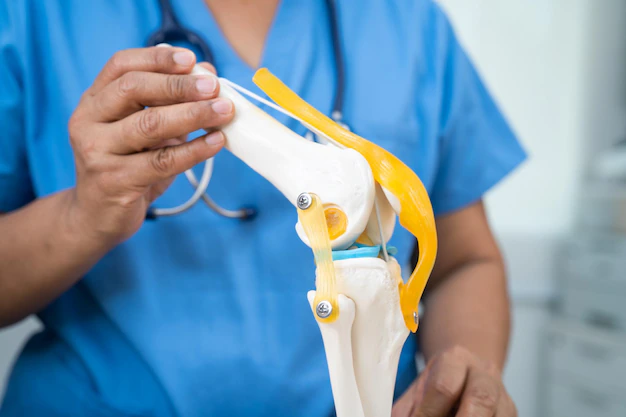
Traditional knee replacement – the kind that’s been done for decades – is a manual operation. The surgeon plans the alignment from your X-rays, then uses a set of mechanical guides to make the bone cuts and set the implant in place. It works. Millions of people walk comfortably today because of it, and any honest surgeon will tell you a well-done manual knee replacement is a very good operation. The result leans heavily on the surgeon’s judgment and hands: reading the anatomy right, getting the balance right, putting the implant exactly where it should sit.
What Robotic-assisted Knee Replacement is
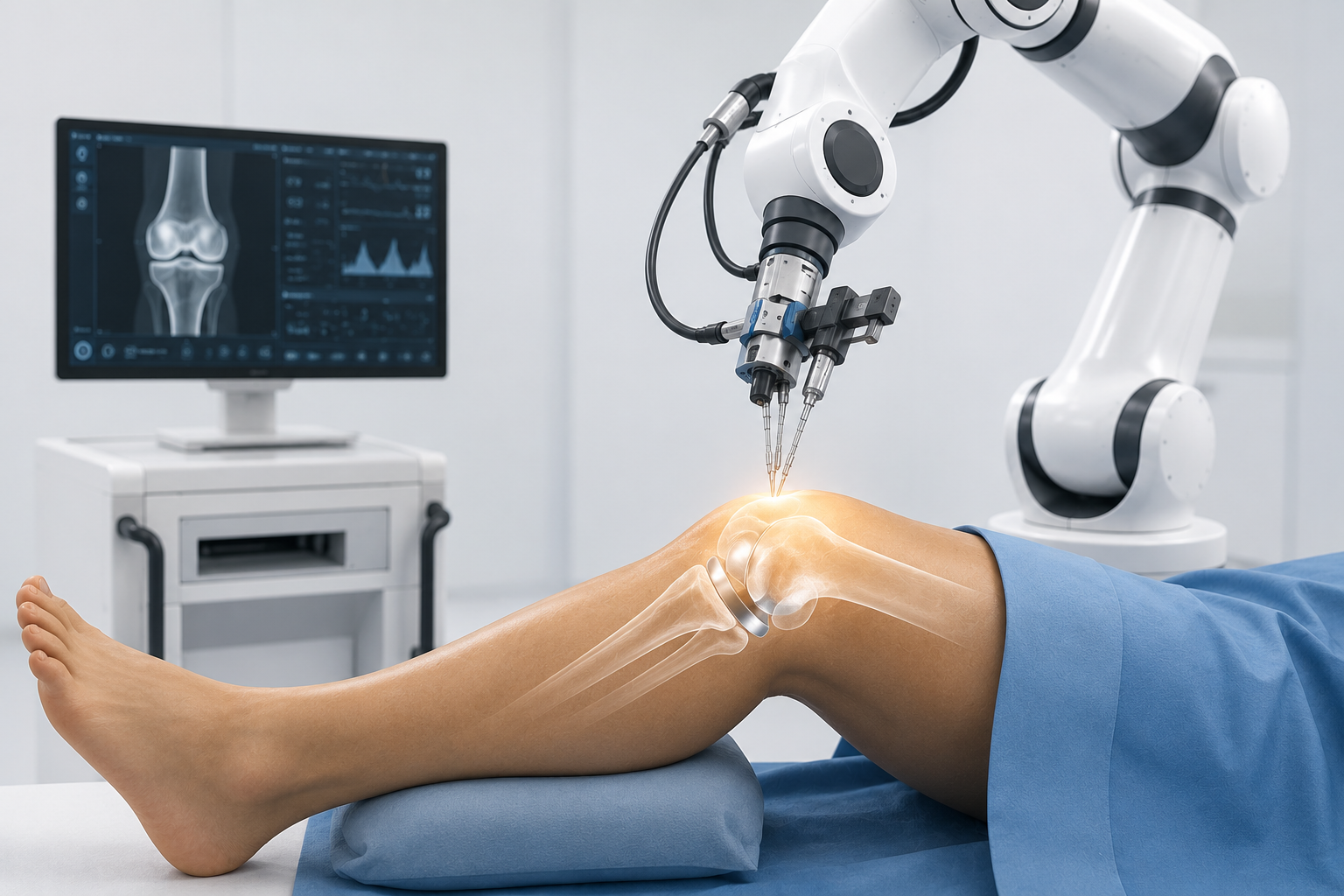
Robotic assistance changes how that plan is made and carried out – not what the operation is. Before I make a single cut, the system builds a three-dimensional picture of your specific knee. With the VELYS platform we use, that picture comes from your own anatomy during the operation, so there’s no separate CT scan beforehand: no extra radiation, no scan appointment to arrange. Then, as I work, the system holds me to the plan to a fraction of a millimetre and gives me live feedback on alignment and balance. I’m still the one operating. The robot is the most precise instrument on the tray, not a substitute for the person holding it. If you want the step-by-step, I’ve written it out separately: how robotic knee replacement works →.
The Two, Side by Side
| Traditional (manual) | Robotic-assisted (VELYS) | |
| Planning | Surgeon experience + landmarks | A plan built from your own anatomy |
| Imaging | Standard X-rays | Imageless – no pre-op CT scan |
| Alignment | Jigs + surgeon judgment | Live robotic guidance, sub-millimetre |
| Soft-tissue balance | Judged manually | Guided by real-time data |
| Who operates | The surgeon | The surgeon (robot assists) |
| Suitable for | Total & partial knee | Total & partial (UKA) knee |
What The Evidence Actually Says
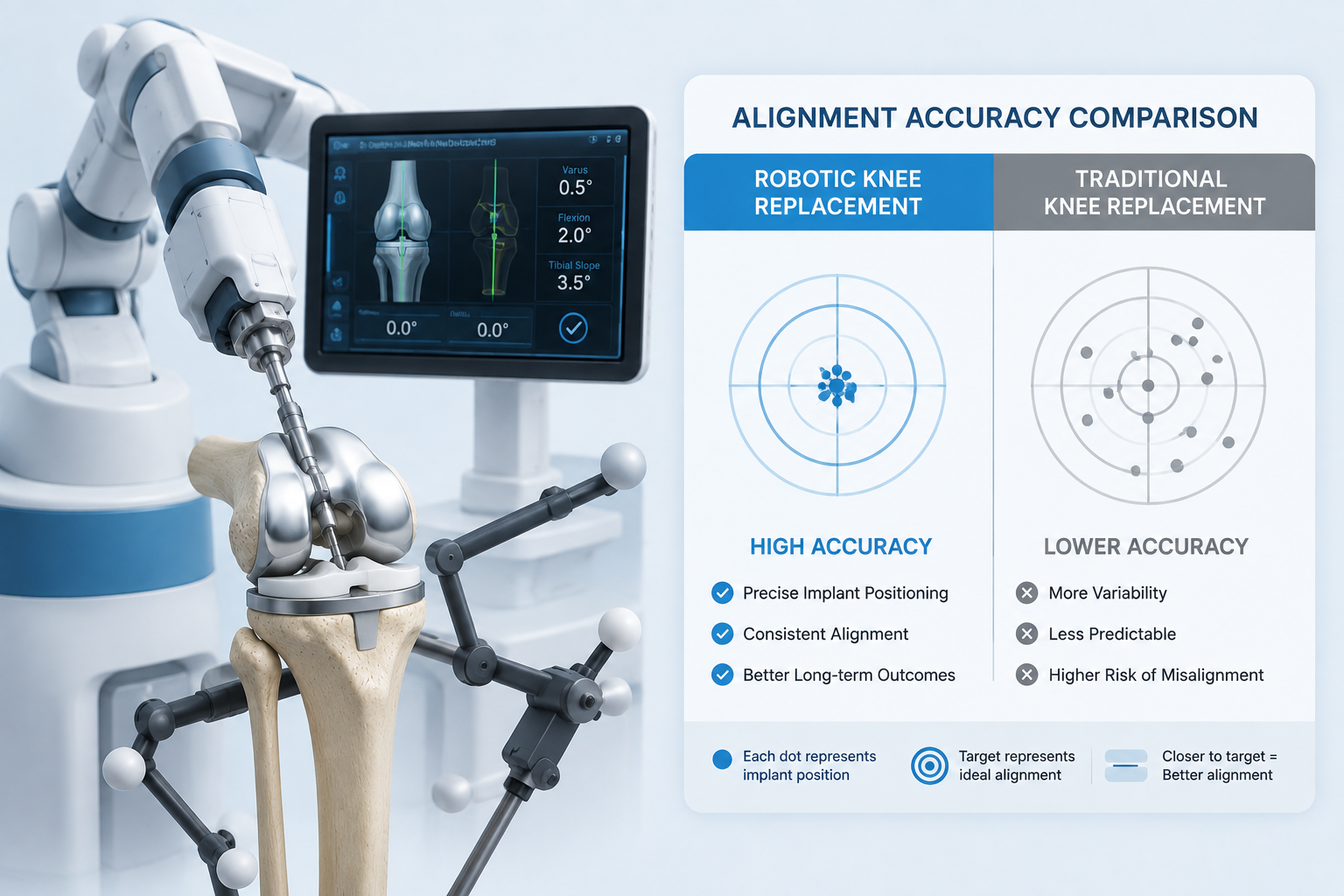
This is where I’d ask you to be a little skeptical of anyone – a website included – that promises too much. What the studies show fairly consistently is that robotic assistance improves the accuracy of implant alignment and positioning, and some report a smoother early recovery. What’s still being worked out is how much that accuracy changes things ten or fifteen years down the line. My honest read: the precision is real and worth having, and the long-term picture looks promising but isn’t fully settled yet. Anyone telling you robotic surgery guarantees a better result than an experienced surgeon’s manual work is overselling it.
So, is Robotic “better”?
Not on its own. A robot in inexperienced hands is not better than a skilled surgeon working manually. What’s genuinely better is an experienced surgeon plus that precision – and that’s the combination I’d want for my own family. I trained in joint replacement in Germany, and I’ve spent years doing partial knee replacements here in Vadodara, which is one of the more demanding procedures in the field to get right. The robot doesn’t replace any of that. It sharpens it.
Which One is Right for You?
Honestly, that depends on your knee – and it isn’t something to settle from an article. It comes down to how much of the joint is worn, your age and how active you are, your bone quality, and whether a partial or a total replacement fits. Some patients are a good match for robotic partial knee replacement; others are better served a different way, and if that’s you, I’ll say so plainly.
How We Do it At Ashutosh
At Ashutosh, robotic-assisted knee replacement is surgeon-led, done on the imageless VELYS platform, and available for both total and partial knee – all here in Vadodara, without a trip to Ahmedabad or Mumbai and a week of recovery away from your family. If you’d like the full picture of the programme, start here: robotic knee replacement in Vadodara →. Or simply come in, and we’ll look at your knee together.
Frequently Asked Questions
Is robotic knee replacement better than traditional?
Not automatically – and I’d be wary of anyone who says it is. Robotic assistance improves the accuracy of implant alignment, and studies suggest that helps. But a good outcome depends most on the surgeon’s skill and on your individual knee. Think of it as a precise instrument in an experienced surgeon’s hands, not a shortcut to a better result.
What's the main difference between robotic and manual knee replacement?
It’s in the planning and the execution. Manual surgery uses mechanical guides and the surgeon’s judgment; robotic-assisted surgery adds a plan built from your own anatomy and live guidance during the cuts. In both, the surgeon performs the operation.
Is robotic knee replacement more painful or more invasive?
No. The incision and the implant are much the same. The robotic system guides precision during the surgery – it doesn’t make the operation bigger or more painful.
Does a robotic knee replacement last longer?
How long an implant lasts depends on several things – alignment, the implant itself, your weight and activity. Accurate alignment, which the robot helps with, is one contributing factor, but no technique can guarantee longevity on its own.
Does the robot replace the surgeon?
No. It’s surgeon-led from start to finish. I plan and perform the operation; the VELYS system assists with precise execution and never acts on its own.
Can I just choose robotic over traditional?
The right approach – and whether total or partial fits – is decided from an actual assessment of your knee. Come in and we’ll talk through both options honestly.