
How Robotic Knee Replacement Works – Dr. Kunal Shah
Home >How Robotic Knee Replacement Works – Dr. Kunal Shah
Robotic knee replacement works in three stages: plan, execute, and verify. First, the surgeon builds a plan for your specific knee – with the imageless VELYS™ system used at Ashutosh Hospital, that plan is created from your own anatomy during the operation, with no pre-operative CT scan. Next, the surgeon carries out the bone preparation and positions the implant while the system gives real-time guidance, holding the work to sub-millimetre accuracy. Finally, the system checks alignment, soft-tissue balance and joint stability before the implant is fixed in place. Throughout, the surgeon – Dr. Kunal Shah – plans and performs the surgery; the robot assists with execution.
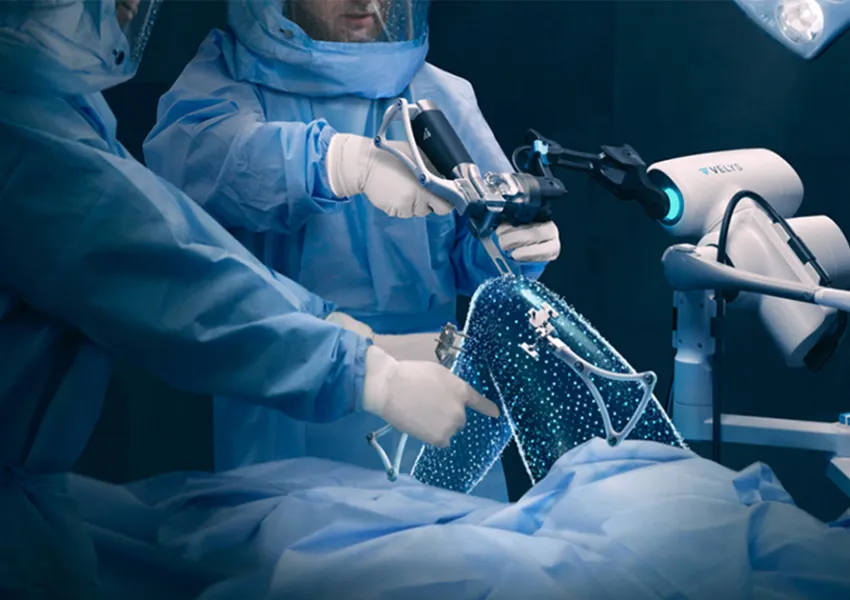
Patients ask me all the time what the robot actually does during their operation – whether it takes over, whether they should be worried, whether it’s some machine working on its own. Fair questions, all of them. So let me walk you through exactly what happens, in order, the way I’d explain it to you across the desk in clinic.
Before The Day of Surgery
Before anything robotic, there’s the ordinary but important work of deciding whether you need surgery at all. I examine the knee, look at your imaging, and we talk through whether you’re better served by a total replacement, a partial one, or something short of surgery for now. Not every painful knee needs replacing, and I’ll tell you if yours doesn’t. If we do go ahead, you’ll have the usual pre-operative checks so we know you’re fit for the anaesthetic.
Wondering whether you’re even a candidate? Start here: robotic knee replacement in Vadodara →.
Step 1: The Plan, Built From Your Own Knee
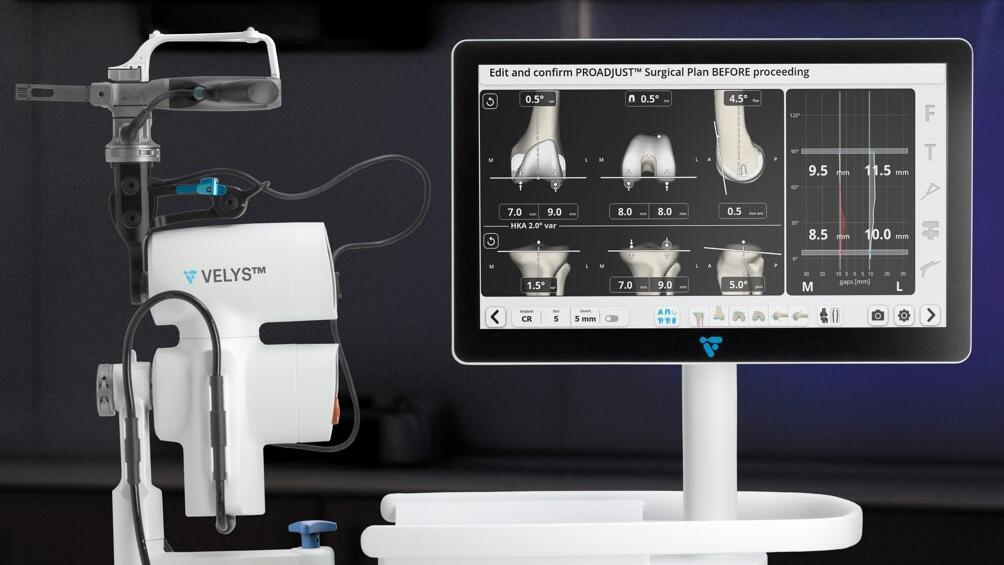
Once you’re under anaesthetic and the knee is open, I map its exact shape and the way it moves. This is where “imageless” matters. Some robotic systems need a CT scan done days in advance to build their plan; the VELYS system we use builds it from your actual anatomy right there, during the operation. For you that means one less scan, no extra dose of radiation, and a plan based on how your knee genuinely is – not how it looked on a picture taken a week earlier. From that map, I set the plan: where the implant sits, how the leg lines up, how the ligaments will balance.
Step 2: Carrying Out The Plan, Precisely
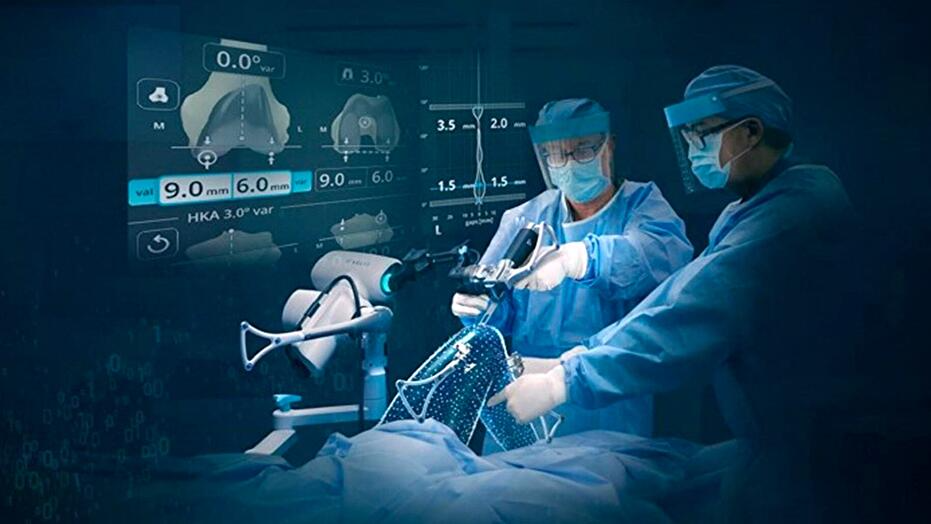
Now the actual work. I make the bone cuts and prepare the surfaces, and this is where the robotic assistance earns its place – it keeps my instruments inside the plan to a fraction of a millimeter and stops them straying beyond it, which helps protect the soft tissue around the joint. It’s a little like the difference between drawing a line freehand and drawing it against a steady edge: same hand, same skill, tighter result. I’m controlling every movement. The system is making sure that movement matches the plan.
Step 3: Checking it Before It’s Final
Before I fix anything permanently, the system lets me take the knee through its full range of movement and shows me the alignment and balance as live figures. If something needs a small adjustment – a touch more balance on one side – I make it now, while it’s still easy to change. Judging that balance by feel alone is one of the genuinely hard parts of a manual operation, and being able to see it is one of the real advantages of doing it this way.
Total or Partial – Same Idea, Different Scope
The three stages are the same whether you’re having a total or a partial knee replacement. In a total, I resurface the whole joint. In a partial knee replacement – I treat only the one worn compartment and leave the healthy rest of your knee alone. Partial replacement preserves more of your own knee, and it’s a procedure I’ve focused on for years. The VELYS platform handles both.
Why “imageless” Keeps Coming Up
I keep returning to the no-CT-scan point because patients appreciate it once they see what it means: no separate scan appointment, no added radiation, no gap between planning and surgery, and a plan that reflects your knee exactly as it is on the day. It’s a quietly big deal.
What The Robot Doesn’t Do
Worth saying plainly: the robot doesn’t decide anything. It doesn’t choose your implant, it doesn’t decide your alignment, and it never moves on its own. Every judgment in your operation is mine. The system is there so I can carry those judgments out more precisely than the unaided hand can manage.
If you’d like to know who’s doing that judging: Dr. Kunal Shah →.
After Surgery
Knee replacement recovery has come a long way over the years. Many patients are up and moving with support soon after surgery, and from there a structured physiotherapy plan does most of the work – the operation is really only the first step. I’ll give you a recovery plan built around your knee and your life, not a generic timeline off a chart.
Frequently Asked Questions
What are the steps of robotic knee replacement?
Three, really: plan, execute, verify. I build a plan for your specific knee, carry out the bone preparation and implant placement with the system’s guidance, then check the alignment and stability before fixing the implant in place.
Does robotic knee replacement need a CT scan?
No – and this is one patients are glad to hear. The VELYS system is imageless, so there’s no pre-operative CT. The plan is built from your knee during the operation, which spares you the extra scan and the extra radiation.
How long does the procedure take?
Broadly similar to conventional knee replacement, and it varies with the case and with whether it’s a total or partial. I’ll give you a realistic idea for your situation when we meet.
Is robotic knee replacement safe?
It’s an established, surgeon-led technique. As with any surgery there are general risks, and I’ll go through them honestly with you before we decide anything.
Who controls the robot during surgery?
I do. I plan and perform the operation; the system assists with precise execution and does nothing on its own.
Can the robot be used for partial knee replacement?
Yes. VELYS supports both total and partial (unicompartmental) replacement. The same three stages apply, adapted to the single compartment being treated.