
Frozen Shoulder Treatment in Vadodara
Home > Frozen Shoulder Treatment in Vadodara
A frozen shoulder creeps up slowly – first an ache, then stiffness, until one day you can’t reach behind your back or lift your arm overhead without sharp pain. It is one of the most common and most frustrating shoulder problems, and the good news is that most cases recover fully with the right treatment – usually without surgery.
At Ashutosh Hospital, our orthopaedic team treats frozen shoulders with a clear, staged approach that gets the shoulder moving again and the pain under control.
What is a Frozen Shoulder?
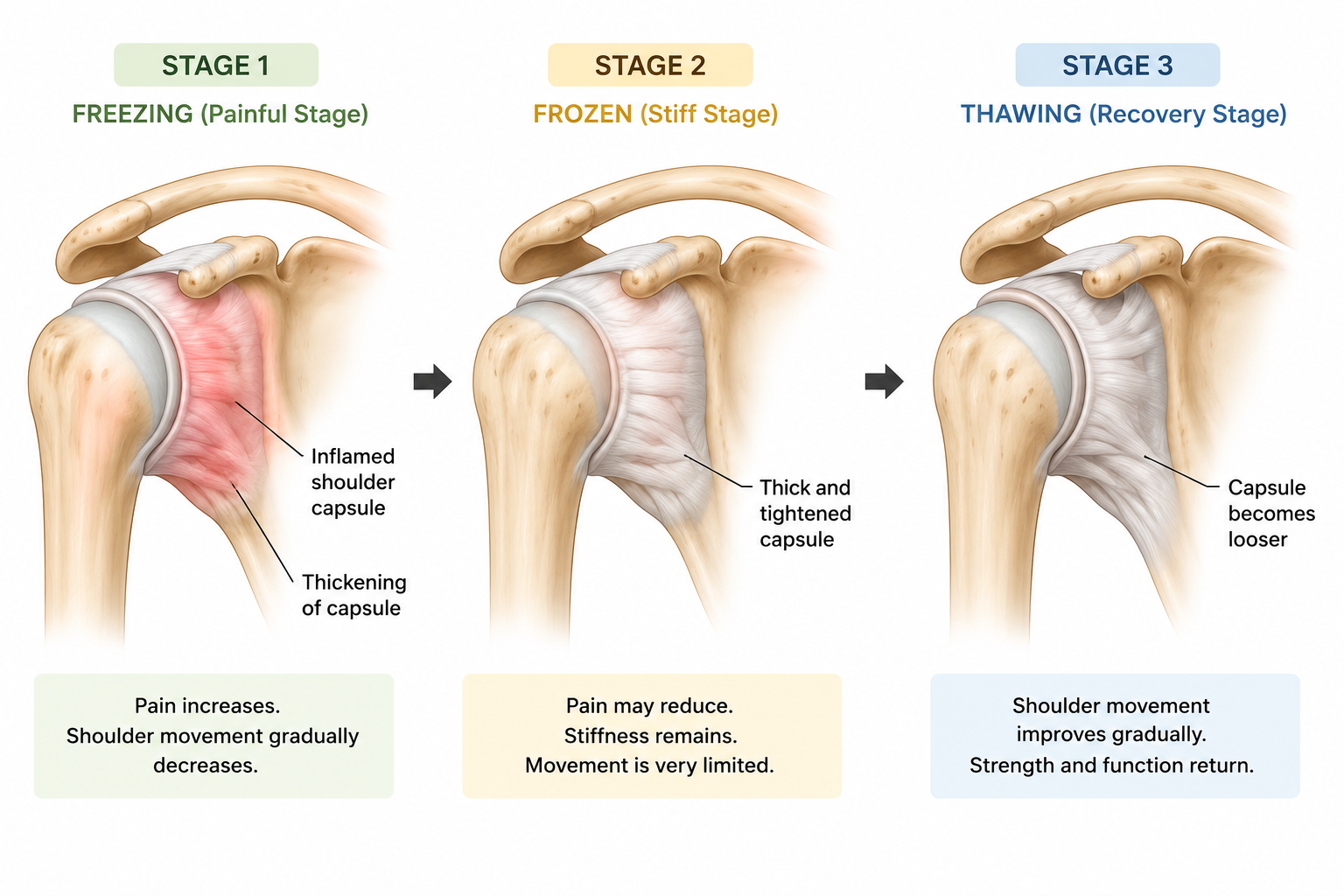
Frozen shoulder – known medically as adhesive capsulitis – is a condition where the capsule around the shoulder joint becomes inflamed, thickened, and tight. This causes pain and a progressive loss of movement. It typically affects people between 40 and 60, and is far more common in people with diabetes and thyroid disorders.
It usually moves through three stages:
- Freezing stage – increasing pain and gradually reducing movement
- Frozen stage – pain may ease, but stiffness is at its worst
- Thawing stage – movement slowly returns

Symptoms to Watch For
- A deep, aching pain in the shoulder, often worse at night
- Increasing stiffness – difficulty reaching overhead, behind the back, or across the body
- Trouble with everyday actions like dressing, combing hair, or fastening a seatbelt
Who is At Risk?
Frozen shoulder is strongly linked to diabetes – diabetic patients develop it more often and may have a more stubborn course. It can also follow a period of shoulder immobility, such as after an injury or surgery, and is more common in women. If you are diabetic and your shoulder is stiffening, get it assessed early – earlier treatment means easier recovery.
How We Treat Frozen Shoulder
Most frozen shoulders are treated successfully without surgery.
Physiotherapy. A carefully graded stretching and mobility programme is the cornerstone of treatment. Our physiotherapists guide you through the right exercises for your stage – pushing movement without aggravating the joint.
Pain control and medication. Settling the inflammation makes physiotherapy more effective and helps you sleep.

Image-guided injections. A precisely placed corticosteroid injection – and in some cases hydrodilatation, which gently stretches the capsule with fluid – can dramatically reduce pain and speed up the return of movement.
Manipulation under anaesthesia (MUA). For the small number of shoulders that stay stubbornly stiff despite physiotherapy and injections, a manipulation under anaesthesia gently frees the tight capsule and restores movement while you are asleep. It is a short, day-care procedure, followed straight away by a focused physiotherapy programme to hold on to the range of movement gained.
This is an area of genuine depth for us. Dr. Ajay Shah has performed shoulder manipulation under anaesthesia for over 30 years, and our team carries out more than 300 of these procedures every year – the kind of experience that translates into a safe, confident procedure and consistently good results.
Recovery
Frozen shoulder is a condition that rewards patience and consistency. With the right treatment most patients recover full, pain-free movement – though the process can take several months. The earlier treatment begins, the smoother that recovery tends to be.
Frequently Asked Questions
Does a frozen shoulder go away on its own?
It often does eventually, but that can take a year or more of pain and limited movement. The right treatment relieves pain sooner and restores movement faster, so there is no reason to simply wait it out.
What is the fastest way to treat a frozen shoulder?
A combination of guided physiotherapy and, where appropriate, an image-guided injection tends to give the quickest relief. Starting early makes a big difference.
Is frozen shoulder linked to diabetes?
Yes. People with diabetes are significantly more likely to develop frozen shoulder, and may have a more prolonged course – so early assessment is especially important.
Will I need surgery for a frozen shoulder?
Usually not. The large majority of cases resolve with non-surgical treatment. For the few shoulders that stay stiff despite physiotherapy and injections, a manipulation under anaesthesia – a short, day-care procedure – can restore movement.
Is physiotherapy needed after manipulation under anaesthesia?
Yes, for a short period afterwards. Physiotherapy in the days following the procedure is important to maintain and build on the movement regained – your physiotherapist will guide you through it.
What exercises help a frozen shoulder?
Gentle, graded stretches such as pendulum swings and assisted range-of-motion movements help – but the right exercises depend on your stage, which is why a physiotherapist-guided programme works best.