
Spine Surgery in Vadodara – Microscopic, Endoscopic & Pain Management │ Ashutosh Hospital
Home > Spine Surgery in Vadodara – Microscopic, Endoscopic & Pain Management │ Ashutosh Hospital
Spine Surgery in Vadodara – Ashutosh Hospital
Back and neck pain are among the most common reasons people stop doing what they love. For most patients, the right answer is not surgery at all – it is an accurate diagnosis and the least invasive treatment that solves the problem.
At Ashutosh Hospital, our dedicated Spine Unit follows a clear philosophy: diagnose precisely, exhaust non-surgical options where appropriate, and when surgery is needed, do it through the smallest possible window with the most advanced technology available. As an NABH-accredited orthopaedic super-speciality hospital, we bring imaging, anaesthesia, intensive care, and rehabilitation together under one roof.
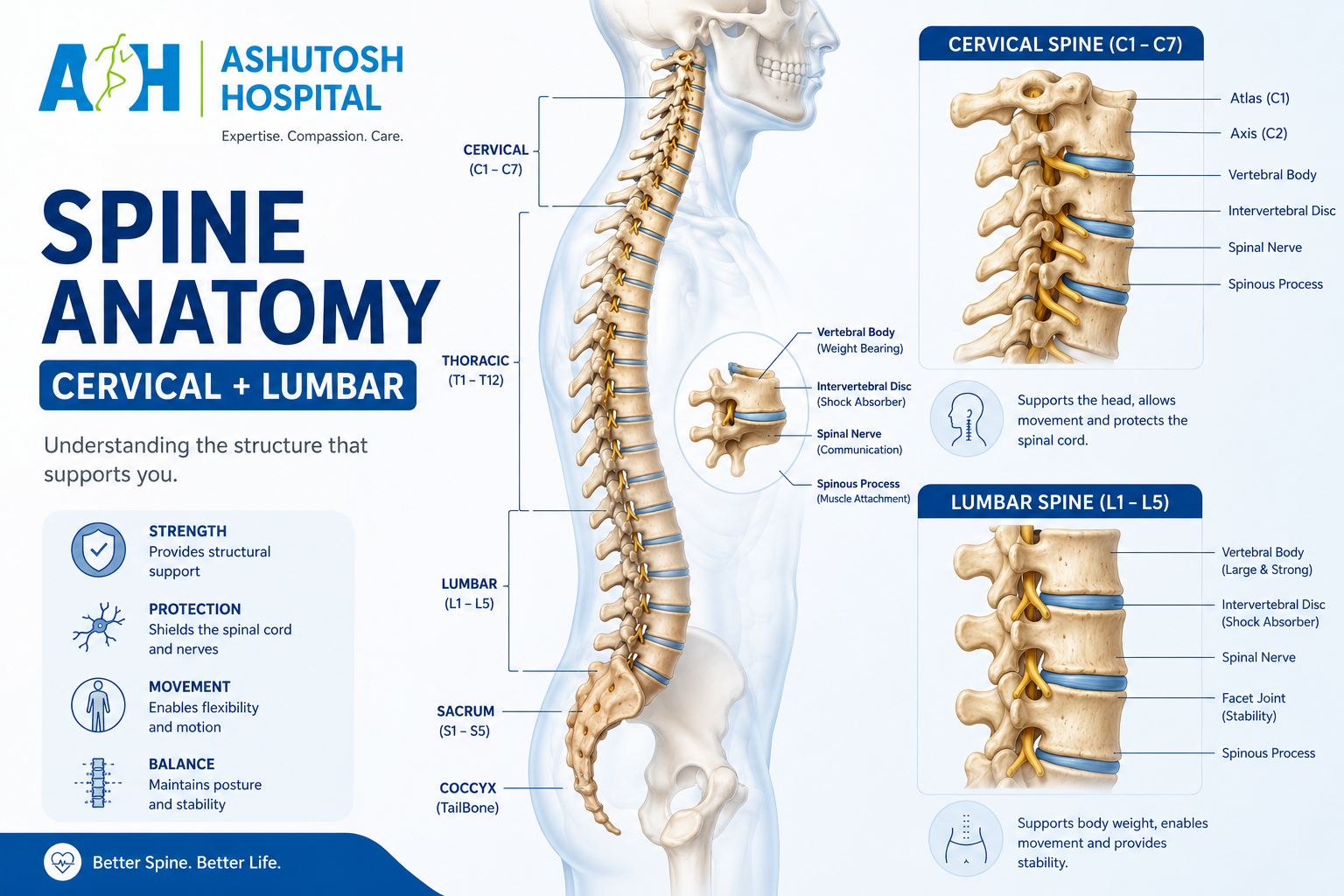
Conditions We Treat
- Degenerative disorders of the cervical and lumbar spine – disc herniation, sciatica, spinal stenosis, spondylolisthesis
- Fractures of the cervical, dorsal, and lumbar spine
- Spinal infections
- Spinal tumours
- Nerve-related back and leg pain requiring pain management procedures
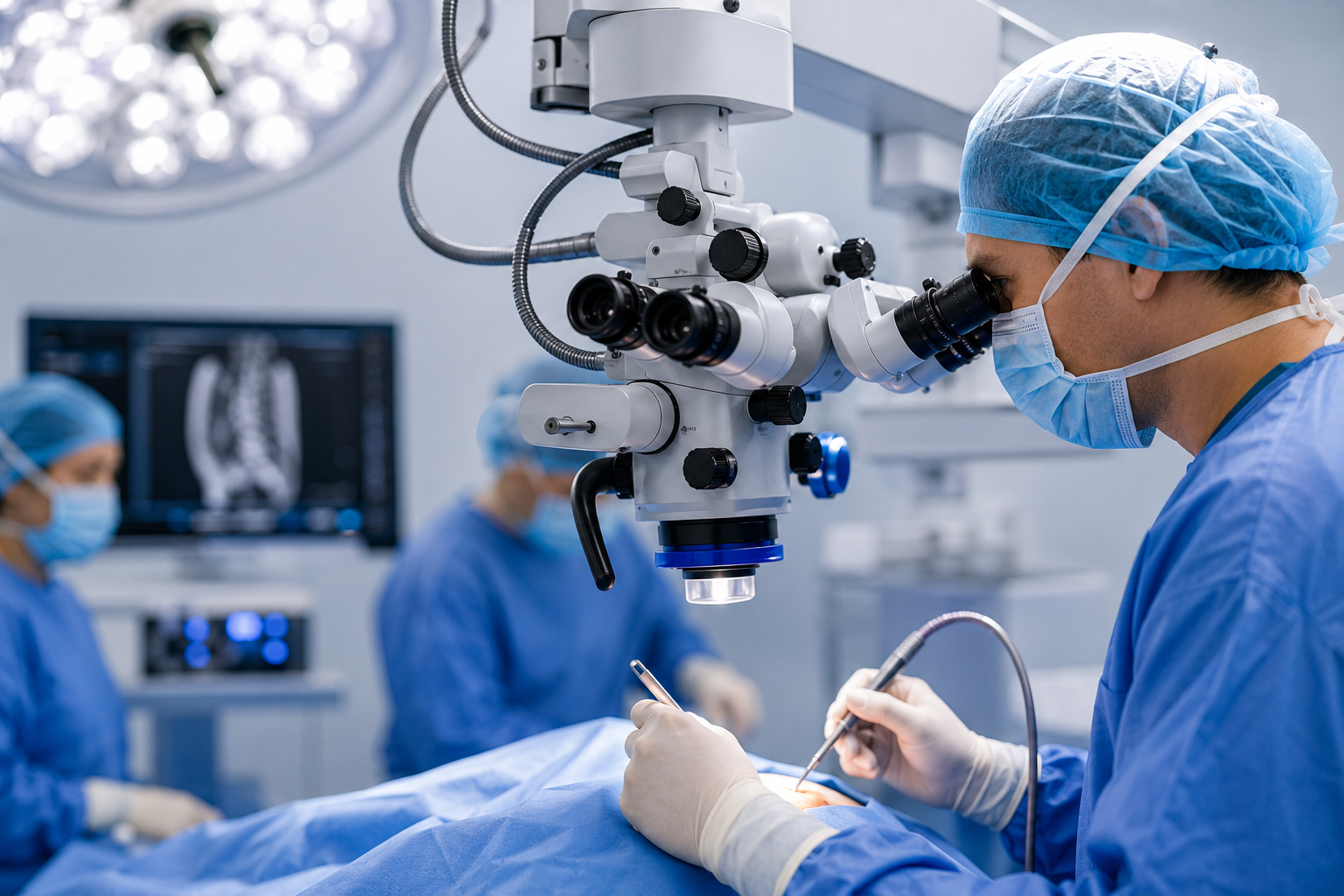
Advanced Spine Surgery Techniques
Modern spine care is defined by precision and minimal disruption. The less we disturb the muscle, bone, and nerves around the problem, the less pain a patient has afterwards and the faster they recover. Three capabilities sit at the centre of how we do this.
Microscopic Spine Surgery
For delicate work around the spinal cord and nerve roots, precision is everything. Ashutosh Hospital has a surgical microscope dedicated exclusively to spine surgery – giving the surgeon high-magnification, brightly illuminated vision of the smallest neural structures. This allows nerves to be decompressed and disc herniations removed through smaller incisions, with less tissue damage, reduced blood loss, and a faster recovery.
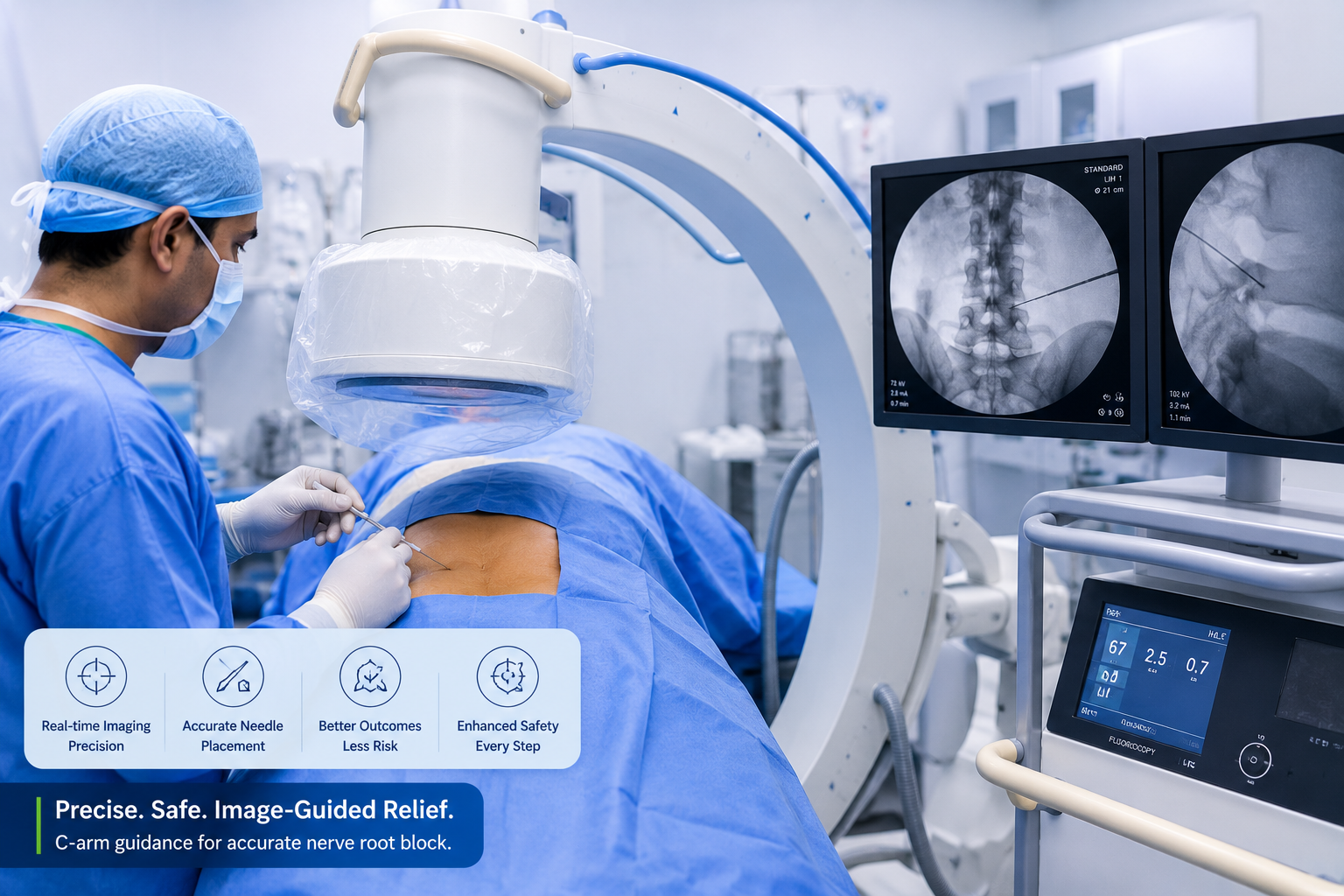
Endoscopic Spine Surgery
Endoscopic (keyhole) spine surgery is the least invasive option for many disc and nerve-compression problems. Working through an incision smaller than a centimetre, the surgeon uses a high-definition endoscope to treat the problem with minimal disturbance to the surrounding muscle and bone. For suitable patients this means a day-care or overnight stay, very little post-operative pain, and a return to routine within days.
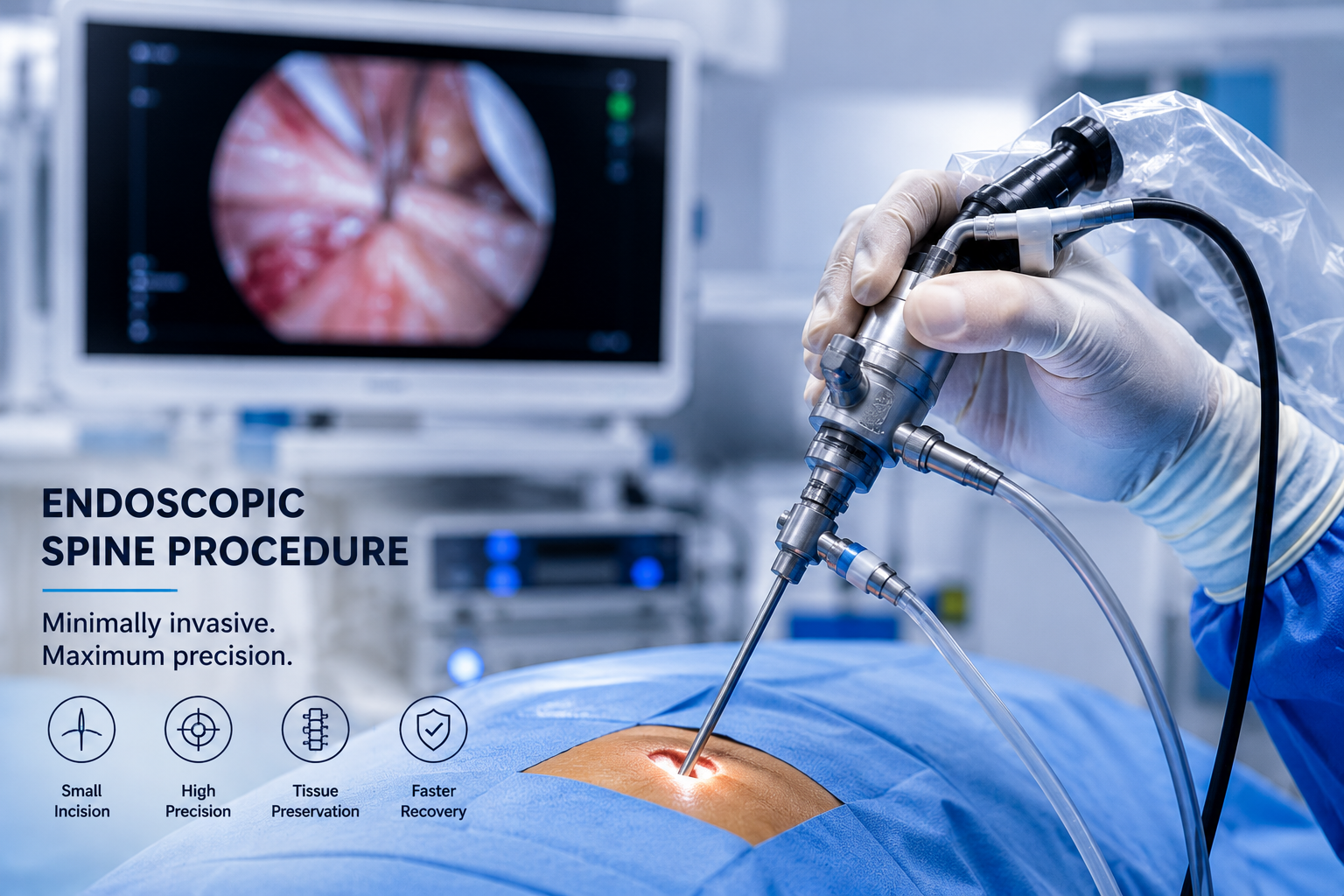
Expertise in Pain Management – Nerve Root & Epidural Blocks
Not every spinal problem needs surgery. Our Spine Unit has particular expertise in image-guided pain management – including selective nerve root blocks and epidural injections – performed under image intensifier guidance for pinpoint accuracy. These procedures relieve sciatica and nerve-related back and leg pain, and in many patients help avoid surgery altogether.
Why Patients Choose Our Spine Unit
Surgery is the last resort, not the first. A great deal of spinal pain can be resolved without an operation. Our spine team and specially trained spinal physiotherapists work together so that, wherever it is safe to do so, patients recover through rehabilitation and pain management rather than surgery.
Diagnosis comes first. Special emphasis is placed on careful examination and imaging before any treatment decision, so each patient is offered the management protocol that genuinely fits their problem – not a one-size-fits-all approach.
A pioneering imaging heritage. Dr. Ajay Shah introduced real-time image-intensifier (fluoroscopy) imaging to Vadodara in the 1990s. That same commitment to image-guided precision now underpins our nerve root blocks, fracture fixation, and minimally invasive spine work.
Everything under one roof. Imaging, high-end anaesthesia, modern operating theatres, intensive care, and spinal rehabilitation are all in-house – which keeps complex spine care safe, coordinated, and predictable.
A track record of volume. On average, around seventy-five spinal surgeries and fifty image-guided pain management procedures are performed here each year.
Recovery and Rehabilitation
Minimally invasive spine surgery has transformed recovery. With smaller incisions and reduced blood loss, most patients are discharged within one or two days, and many can walk just a few hours after surgery. A dedicated physiotherapy team – trained specifically in spinal rehabilitation – guides recovery afterwards, which is often the difference between a good result and a great one.
Frequently Asked Questions
Do I definitely need surgery for my back pain?
Often, no. A large proportion of spinal problems improve with accurate diagnosis, physiotherapy, and image-guided pain management procedures such as nerve root blocks. Surgery is recommended only when it is clearly the best option for your specific condition.
What is endoscopic spine surgery, and how is it different?
Endoscopic spine surgery treats disc and nerve-compression problems through an incision smaller than a centimetre, using a high-definition camera. Because the surrounding muscle and bone are barely disturbed, patients typically have far less pain and a much quicker return to normal life than with traditional open surgery.
What is microscopic spine surgery?
It is spine surgery performed using a high-powered surgical microscope that magnifies and illuminates the delicate structures around the spinal cord and nerves. Ashutosh Hospital has a microscope dedicated solely to spine surgery, allowing precise decompression through small incisions.
Will a nerve root block or epidural injection help my sciatica?
For many patients with nerve-related leg or back pain, yes. Performed under image guidance for accuracy, these procedures can provide significant relief and, in a number of cases, help avoid surgery altogether. Whether they suit you depends on your diagnosis.
How soon can I walk and go home after spine surgery?
After minimally invasive procedures, many patients walk within hours and are discharged within one to two days. Your exact recovery depends on the procedure and your overall health.
Is spine surgery safe?
Spine surgery today is far safer than it once was. At our NABH-accredited facility, advanced anaesthesia, image guidance, and intensive-care support make spinal procedures safe and predictable, with a low complication rate.